Tuesday, September 1, 2020

You should never be judged for picking assist options...not even by the game itself.

 So I can't believe I haven't talked about this yet, but dammit I love Control a lot. Honestly, I love Remedy Entertainment a lot. Never has a company done so much in an attempt to mix movie-type storytelling into their games (looking at you, Quantum Break TV episodes) and done so amazingly well. I've played almost every game by them (I'm only missing Max Payne, which, came out way too early in my life in my defense) and have enjoyed all of them. And Control is right up there at the top of my list. Everything about the title is phenomenal. From it's characters to powers to it's super crazy AF story that goes into some crazy directions. There's only a few annoying ticks I have with the title, and one of them is the game's intense difficulty. 

We know I'm not a fan of ultra tough games. That's why I see the fact I beat Control as a huge accomplishments. Yes there was many times I got extremely frustrated and just-done with the game. But the need to see what happens next was so important to me, that I pushed on. When I beat it, I honestly had no reason to come back to it due to the combat. But, then Remedy did the one thing that had me racing back, like a cookie on a string. They announced a connected 'Remedy-Verse', a DLC that brought in another character from their past, Alan Wake, and an assist mode for the game. 

Talk about right up my alley.

So I booted up Control as the DLC and the assist options went live, eager to start up and learn about a character I haven't seen in ages (did I mention I really loved Alan Wake? I really do) and I instantly went into the options to find the assist options. When I did, I got a glimpse of them. Immortality, the ability to change the percentage of damage taken, reloading, the energy gain...it was immense and amazing. But when I scrolled over to turn them on, a message caught my eye. 


Oh. Oh, that's not good at all.

Yeah, let's discuss this. For one, I can get designing your game to be challenging and rewarding. I, for one, felt incredibly rewarded after I beat it, knowing I fought through the difficulty and frustration to reach that satisfying ending. But, key word was I fought the difficulty. To be frank, I hate difficult games, not difficulty options. When you pick the 'casual' option, and the game is still extremely difficult? Then we have issues. 

Well, let's infer that's the reason the developers put in assist options a year after the game released. why weren't they put in at launch? Was it hard, or did the developers want people to play the game the way they intended to? Well, I'm a disabled gamer, with my anxiety making playing difficult games...difficult. I strive on games that include assist options and difficulty options such as Story Only, with aim assists, etc. So, for one, I cannot for a fact play games the way most developers intend people to. But I can still enjoy myself, I can still feel rewarded. 

Assist mode was made for people like me, to enjoy games like Control the way we want to. It allows us to still enjoy a game for it's story, it's characters, and even it's gameplay when we can edit it the way we want. Now, what we don't want, is a game to honestly patronize us for turning them on. 

Let me explain.

We don't care if your game was meant to be 'challenging and rewarding'. That's fine. But a game should also be rewarding for those not looking for a challenge, especially for those who do not want one. I play games to be relaxed. I do not play games to get so frustrated I almost put the game down for good. That's just a waste of my time and money. When a game gives me assist options, to me that's the developers saying we want you to enjoy yourself, no matter how you play. We just want you to play our game and have fun in the process. Which I am all here for. 

I always go back to it, but The Last of Us 2 is a perfect example of this. Those assist options are just-everything. It does not diminish your experience, you can raise the challenge as much as you want, and I did. I still played that game with the level of difficulty I felt comfortable with, and changed it if I wanted to. Even those who are not disabled, still got use of those options to help them through the game. But what The Last of Us 2 did that I appreciate greatly? Was it did not scold me for turning on some of those options. It did not tell me 'hey these options are here, but this game is meant to be challenging, and we are telling you not to turn them on.'.

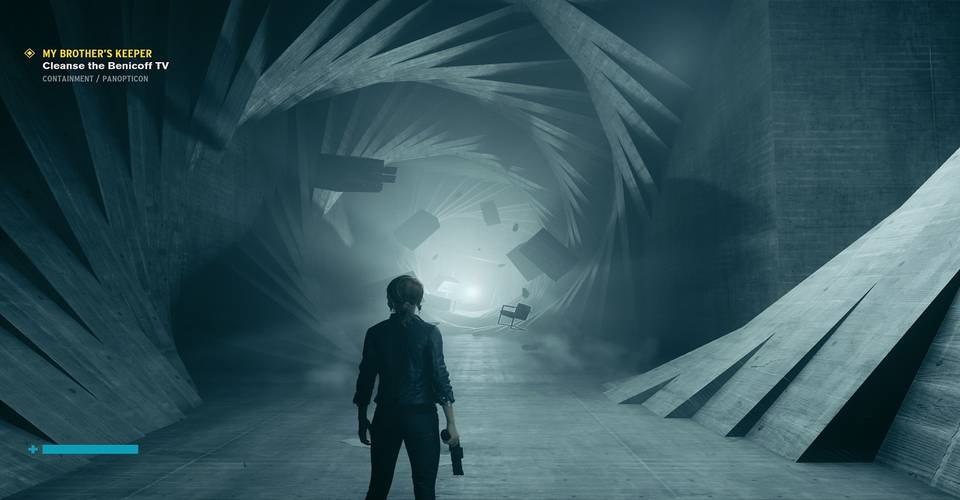
What Control does, is it flat out tells you that this was not the way Remedy wanted the game to be played. Well, then how did they want disabled gamers to play Control? Did they want us to fight the difficulty, or the aiming in tense situations? While i'm aware this wasn't their intentions, the way it's worded is they basically don't want us to, or force us to fight through the difficulty and annoyance. Because obviously, we don't want to fight the developers and the play the game the way they didn't intend us too! (That was sarcasm, friends).
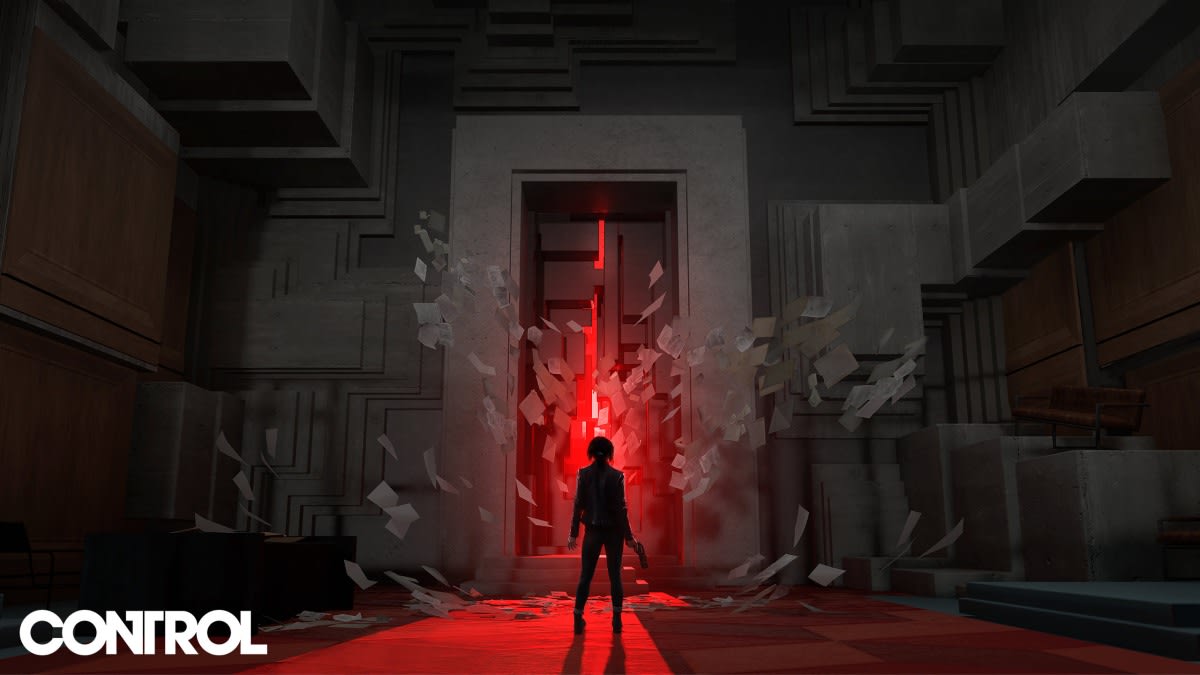
Remedy's latest trailer for 'Control' digs into the supernatural shooter's  story | Engadget

((image credit; engadget))

As I spoke to others about this when it released, I began to see that not everyone was fans of the way Remedy chose to represent it's assist options. Speaking to two friends, I got two answers that resonated with me extremely. While my friend Blaine had no real need for them, she did consider the way they represented them problematic. 

   "..but seeing "This game is intended/designed to be difficult so please try it normally before using assists" just sends an awkward message implying ppl who need those assists are thereby not getting the "Proper" experience."

Blaine's line about the "proper" experience was extremely telling. While a lot of games are made with a wide amount of players in mind, there are still some that are made with a narrow set of players. Games that are 'souls' like are a good example. Excruciating difficulty with no difficulty options or handicaps to help. While I wouldn't exactly call Control a 'souls' like, it still has some features. Very sparsely placed checkpoints, respawning enemies, etc. are designed to make every encounter difficult and stop you progression until it is beaten. 

Basically, Remedy is saying that they want the game to be that, difficult and challenging, because that's how they made it to be. Rewarding is one thing, but it's also a very loaded word. People can find anything 'rewarding', to the hardest challenge and the easiest one. You can complete what looks like the most impossible looking jump, or defeat the toughest, secret boss and still feel rewarded, even if you used assist options to do both of those things.  

Speaking about challenging and difficult as I brought up earlier, the second person I spoke to used said assist options specifically for the difficulty. Speaking to Jeff, he wanted to play the game and enjoy the story it was trying to tell, not the gameplay attached to it. Asking him how he felt with the assist mode wording, he also brought up the idea on developer intention.


"Yeah I didn't care for it. I have no problem with a developer having an "intended" default mode that they feel best conveys the experience they want the player to have."

"But that message went too far into guilting you for using it"


I know it's taken me long to say this (at least I think, i've been typing for awhile) but I have no problem with developers having an intended way to play their games. I know for a fact I am not like every other gamer, so i'm used to every game having it's 'way to be played'. But, if I'm given the option to make it more tailored towards me, I will do it. No, I'm not hurting the developer, if anything, I would praise them for making the option. Now, as Jeff mentioned, guilting you for using said option? Now that's a different story. 

Again, I'm aware they most likely didn't mean to word it like this, but to me it feels like those who pick assist options, for disabled or non-disabled reasons, are hurting the developers. Ruining the image they had for their game, when that should totally not be the case. You can say they added those options in for more people to enjoy the game, but it also comes one year (holy shit) too late. By this point, people who have played it have already beaten it, and have fought through the difficulty, and some have (like me) had a bad time doing it. 

I love Control alot, like, alot alot. It's one of the most psychologically crazy and down right mind-twisting game that I have ever played, and I love it for that. But it also, in my opinion, not disability-friendly. Even with the assist options. As my title says, you should never feel judged or guilty for picking assist in video games, disabled or not. When a game does do that, it sours the experience by non-verbally telling you that you are 'ruining the experience the developers made' even if it didn't outright say it. With, as someone with severe generalized anxiety, I can say is really, really not good.
Control Full Story Summary and Recap | Game Rant

((image credit; Game Rant))

So, we'll end this by asking, how can they fix this? And that's easy, either rewording or getting rid of their statement all together. The best thing I can say about the options, as The Last of Us did, they aren't gameplay stoppers. You can still get trophies/achievements, you can still beat the main game and all of the DLC with it on and nothing changes with unlockables and side missions. You can still play the game, just in your normal, which is most important. You should be able to enjoy games the way you want to, no matter what. How developers want you to enjoy something is one thing, but they should also give you the options to enjoy it the way you want to, if you decide to use it. Or, if you have to use it, and need to edit the experience to enjoy at you own pace. 

Hi guys! Thank you so much for reading this, and a bigger thank you for Blaine (@morbidcuriousty on twitter) and Jeff (@Jeffsimulator on twitter) for allowing me to ask them questions and quote them in this piece! Their both amazing and deserve the love. 

PS; AWE was fucking great and it's so good to have you back, Alan.


Thursday, August 20, 2020

Why Halo's integration of it's extended universe is...not good.

 I am all for including extended universe fiction into video game story lines, let me preface this piece by stating that. When done right, you can add such little, great details into a game that, for those who have seek out the novels, comics, etc, they have great call backs for their efforts. A Series like World of Warcraft is a great examples of this, with it adding more context for future game expansions. Now, what including extended universe fiction into your games shouldn't do, is hide very important story beats and background behind novels. After a recent play through of the Halo series I am doing with a good friend, specifically Halo 4, and having seen 343 Industries attempt to mix the Halo novels in with the already existing canon they were building in the fourth entry of the series, I feel what and how they are doing it is just...

Well, let's be honest, it isn't good. It's convoluted, and leaves a huge mass hole of confusion in the middle of the games plot, literally a few missions before the end, introducing an insanely important plot point that should not have half of it's background described in only a novel. A background, I will add, is very important to understanding the big reveal in the game. In this short little opinion essay, I will make a quick discussion on how Halo failed it's extended universe integration, and give a suggestion on how they could improve. So, in this post I will be going into a big plot point of Halo 4, and perhaps a bit about the Forerunner trilogy of books as well. Halo spoilers ahead! 

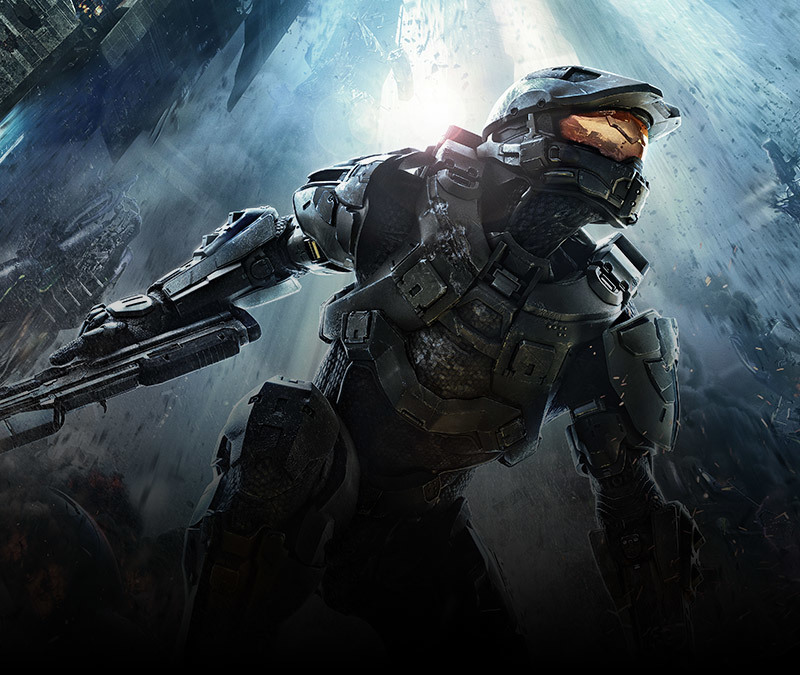
Halo 4 | Games | Halo - Official Site

(image credit; Halo Waypoint)

Near the ending of Halo 4, there is a scene where Master Chief is a shown a vision by a forerunner character called the Librarian. Keep in mind, no point in the video games has this character been discussed or even seen. Here, the Librarian explains to Chief about how in order to defeat the Flood, an alien parasitic species, she went behind the villain of the game, the Didact's back, to implant some genetic coding into certain humans, allowing their genetic code to accelerate and allow them to among other things, evolve past their normal human coding and survive something called the Composer, a weapon that is meant to eliminate the Flood, that is being used by the Didact, the games villain. 

Now, for those who don't know Halo lore, you would think this is a huge plot point. The implications it speaks of, that it isn't just Spartans that are the genetically altered people. If I took anything from that, it's that normal people, even ODSTs, normal soldiers, can have these genes that have been altered long before from the Forerunners. A major point, that 343 chooses to hide behind a trilogy of books titled "Forerunner saga.", a series that follows the Didact and the Librarian, both characters that appear in Halo 4, and a couple other characters that are not even named in the game itself, as it follows the first wipe of all life from the galaxy. An event that has been discussed in the Halo games, and something that has seemingly driven the plots (as seen as the main plot for Chief has seemingly been to stop the Halo Rings from firing). But the main plot taken from the books, is the fact that everything the human race has done, has been set up by the forerunners. Discovering our tech, everything from AIs to the Spartans themselves. Has all been set up by them. Which, one could say is a huge reveal for a series that has gone as long as Halo has.

Now, I know little to nothing about Halo lore. I know basically the same as everyone else does, as someone who only looks at Halo on the surface. But even so, as I watched the cut scene that glossed over the entire plot point, and then asked the person I was playing with 'what the fuck was that?' and he responded with 'oh, this is when they started pulling book lore.' I did what anyone else did. I looked up the book, interested for a moment to know the backstory and what Halo was trying to lead me to. Extended universe, obviously. But when I learned the fact that it was in a trilogy of books, and not one, and the fact that this was a huge plot thread that was hidden in that book trilogy...well, you could say my decision not to read it was because of laziness (as we all obviously have time to read now), and honestly that isn't it. 

Personally, the reason I didn't dive into this and buy the books and just, shove my head into the Halo ocean, is because I was ticked. Angry that 343 had decided to bring in a plot point that was brought up a in a series that, honestly, did a lot of people read? A point that, if it was important as they made it seem, why have it only be skirted over in a CGI cut scene? Then be told then you have to search out a book to get the full backstory? 

Listen I hate to say this, and I hate to be the person who bares this, but that's not good storytelling. That is locking a detail of a major story behind having to buy and put time into another medium. For the dedicated fans, that's great. They most likely will, and get the most out of it. But for those players who only pay attention to surface lore, they will be probably confused all the way through. Wondering why this feels so out of place, what it's supposed to mean, etc. 

Fans So What's the Story in Halo Infinite 343 | Halo Meme on ME.ME

(image credit me.me)

Now, what can 343 in the future do to fix this? Well, an easy thing to say is to remove huge plot points from ancillary novels and leave their books, while still canon, only including side stories. Small thing that can be referenced in small bits of game, to give as a small gift to those who follow your canon and side stories. But also, if you do choose to still add canon into your side content 343 (as if they are even listening???) then I highly suggest you do the following, in nice little list form! 

  1. Add a disclaimer when you announce a new, say, novel. "This is the official prequel to Halo 25!" or "This follows character X, who appears in the upcoming Halo 32!" In order to give context, so people know a broad idea of what the book is covering 
  2. And oh boy, this is the biggest one that no one is going to see coming, but JUST DON'T DO IT. Now, stay with me here as yes, I did mention this in the earlier paragraph. But, it's a simple fix, and other titles have done it to an amazing degree. Put it in collectible files, hide it behind character dialogue or even just put it as a side quest since it looks like Infinite is doing that, which is an amazing first start. The side quest thing, I swear I cannot tell the future of Halo.
As I end this rant, and I'm so sorry it came to this, the topic of story in games is extremely important to me. I believe gaming should be something everybody can get into, and that also works in the story aspect. Make games accessible when it comes to the story is an easier said then done task, but when done correctly, you can make a world lush and full of great story and details. And yes, that does mean you can add ancillary details and things from books and novels. 

Just do right, please? 

I mean if your still here how about getting 343 to add Buck into more things? please? I KNOW YOUR LISTENING.  

UPDATE; wanted to thank a good bro Mak for helping me with the plot questions I had. Can confirm I was so mad I forgot some of the plot talked about in the scene! Thanks for the help, my dude. 

Saturday, August 8, 2020

If my younger self could see my favorite character of all time acknowledge his PTSD...

Other then my in-forever-hiatus hard look at Silent Hill and Hellblade, this is probably the most personal blog post I am ever writing here. And it won't be horrifically long (oh god, I hope not) but it's totally something I need to talk about. During quarantine, I have spent a lot of my free time (when not going deep into World of Warcraft or barreling through the Halo titles with a friend) reading. A hobby I fell off of, in part due to the hole of comics I had subscribed too but never got a chance to read, but it has been a good hot while since I have read an actual novel. 

As I write this, I don't remember the last book I read before my recent finish. I believe it was the biography on the band TOOL's eclectic lead singer James Maynard Keenan (a book I highly recommend, and also add that band on the rather large list of topics I want to write about) but I am a deep sucker for fantasy books. Mostly hard, violent fantasy. The kind of books that don't give a shit if you like the premise or not, it just knows you want to watch people wield magic and swords (and sometimes guns) to just fucking kill people in gruesome ways. And that's the type I love with all of my heart. Even as a rather young kid, I fell in love with this genre, especially with it holding some of the most well written worlds I have ever seen. 

Enter thirteen year old me. As a child, I frequented Barnes and Nobel with friends, spending hours in the starbucks that was attached to the bookstore and spending rather fewer hours (let's be honest, the employees probably hated us) digging through the shelves to find the next big thing. I grabbed a book titled "Kill the Dead", which I later found out was a sequel to a dark fantasy series named "Sandman Slim.", a series that told the story of James Stark, a magic-user that got in with the wrong people and later clawed his way out of hell to get revenge. 

Sandman Slim: A Novel - Kindle edition by Kadrey, Richard ...
((image credit; Amazon))

I. Ate. That. Shit. Up.

Reading the book I had picked up, I told myself I'd buy the first one if I liked it alot. Well, queue me sitting on the floor of a family member's upstairs room as the rest of my family watched the superbowl, head in a book, having my parents remind me to eat. I fucking loved it, and fell in love with the dark, fantasy ridden LA that author Richard Kadrey had created, and I am proud to say Stark was my first book crush (move over Edward Cullen, Peeta. God, Stark would totally gut them with no issue) and I loved his take-no-shit attitude and foul mouth, while he cleaved his way through LA's seedy fantastical underbelly and stopping a zombie apocalypse. I love the characters he met along the way, Candy (a vampire called a Jade) being one of my favorites, and his bartender buddy Carlos, running his rather old school Hawaiian bar. (which honestly, I want to exist)

I write about this, because I recently finally got caught up and finished the most recent book, "Hollywood Dead". It felt like jumping back on the saddle again, returning back to a book series I considered a home to me, with characters I missed and new ones I was having a blast reading about. But something happened near the end of the book that literally made me do a 180 in the best way possible. 

"I should call Allegra and talk to her about PTSD stuff. But no yoga or soy burgers."(Kadrey, 343)

As many people know (or may not know, whoa), I was diagnosed with Childhood Medical Trauma PTSD a few years ago, having gone undiagnosed for years. As a kid, I fought back a lot of the emotions, and it released itself as anger and emotional issues. I always knew I was different, that something was wrong, but I didn't do much about it until I was around eighteen, and later as an early twenty-something. But even as a kid, I knew something was wrong. I gravitated towards characters I connected too, and they were normally ones that had been through traumatic ordeals. I never knew why, but I appreciated knowing that someone else, even if not real, knew how I was feeling, even if I didn't have a name for it.

And all through my literary career, I always wondered why I connected to Stark. He was stoic, angry, covered in scars and probably smelt of gunpowder, blood, and leather. He wielded magic and a blade that could cut anything into pieces. How the hell was I, a thirteen year old nerd, going to see myself in him? Simple. He had gone through the absolute traumatic experience of knowing the people he associated with killed his girlfriend, and locked him in hell, dealing with years of torment and agony. He had gone through his own traumatic experience, and like me, his emotions seemed to be stinted because of it. He rarely let people close, and it was like he only had one mode on; survival. 

My therapist explained to me (after hours and days of hearing my life, which lets be honest, was probably as boring as it can come) about the flight or fight mode in humans. And that, in people like me with PTSD and other mental health disorders, our mode is always turned to fight. While I am not like Stark, though god I wish I was, I am constantly tense, worried, and jumpy. (I cannot begin to explain the amount of times I have screamed when a coworker has casually walked up behind me, or a firework has made me cry because I didn't see it coming) And in Kadrey's writings, there is multiple times Stark jumps at people, instantly aims his weapons, or only knows to speak using violence. 

Reading the recent novel and seeing Stark finally accept the chance he can get help for his PTSD hit something in me. Honestly, I can say it hit that little part of me is still that thirteen year old, angry at nothing in particular because that was all I knew. If I could see Stark accept his own mental health issues, being the manly man he is (I giggle as I type), why couldn't I reach out for help earlier then I did? Of course, it's always a 'what-if' in these situations, but I do entertain the thought. Seeing a character I looked up to as much as I did Stark finally realizing he needed the help and was willing to entertain it. 

As I finish this, I have to smile as I have the book next to me. I doubt Richard Kadrey will see this, but if he does, thank you sir. And I hope I get to see how Stark reaches out for help, as I'm sure I'll be able to still find my parallels as well.


Wednesday, June 24, 2020

Let's talk about accessibility.

Hey all. It's been awhile, hasn't it? First off, I haven't been ignoring here. Far from it, actually. I have been hard at work on my Hellblade/Silent Hill essay, and it's taking a tole for sure. I normally am open about mental health issues in video games and even with myself, but talking about it and digging super intensely can sometimes be taxing. So I take small breaks here and there. But right now, I've been using that time to play some-wait for it- video games! But at the moment, i'm focusing strictly on the biggest title right now, The Last of Us Part II. As a fan of the first game, I am enjoying the extended gameplay and character development-so far. At the moment, I am only around six to nine hours into the game, and due to my terrible video game OCD and need to collect everything, i'm taking my sweet time. 

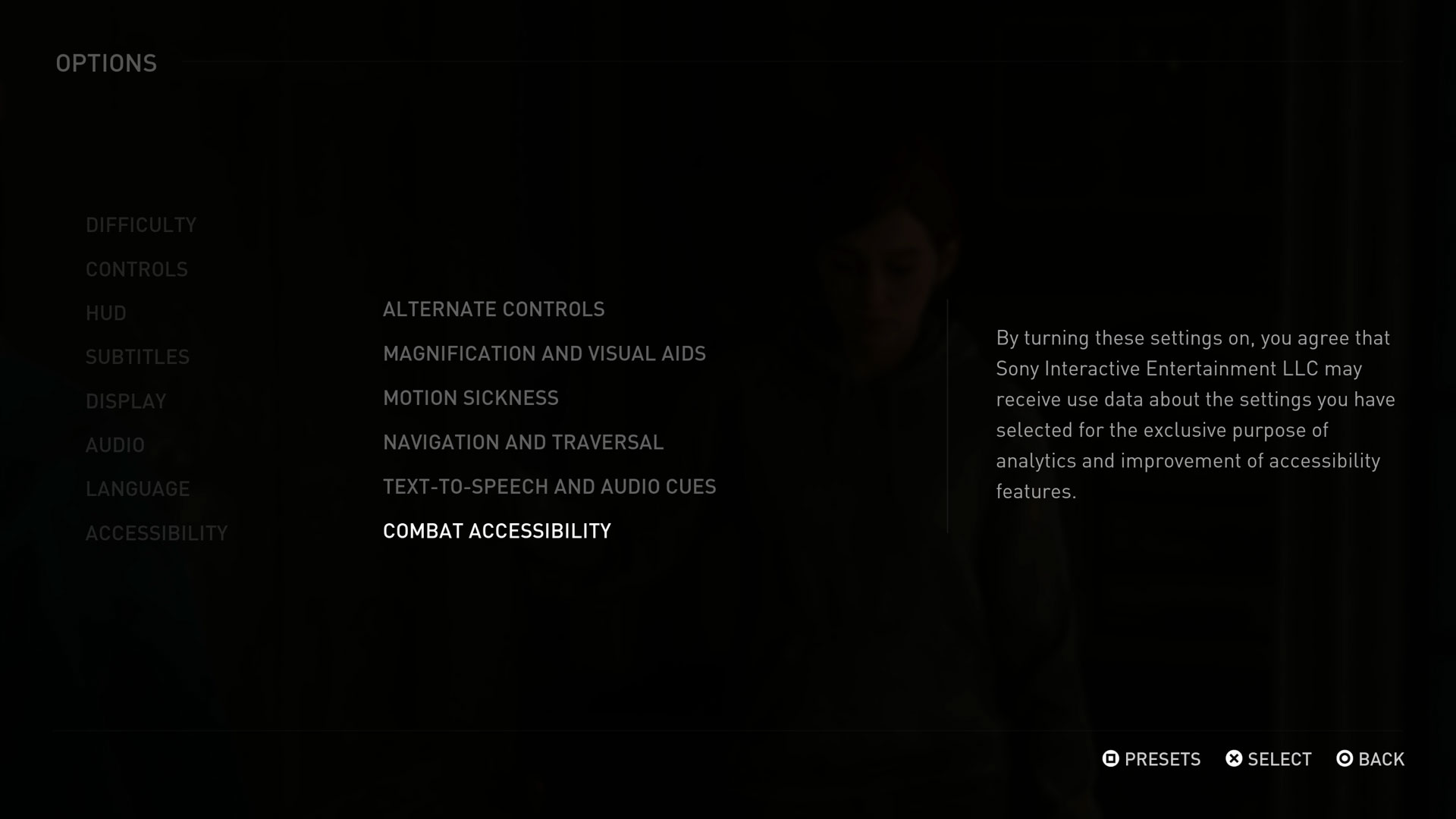
But right now, I'm not going to talk about the game (even though I very much want to) but of something else related to the game; the options. Now, it's a weird thing to talk about when a lot of people, when hearing the word 'options', only think of things like subtitles and brightness features. And while The Last of Us has those, it also has something very different, but one of the most welcoming options menus I have ever seen in games-and one that can help shape the future of AAA titles for all big name consoles.

The Last of Us Part II: Accessibility features detailed ...
((image; playstation.blog.com))

When you start up The Last of Us Part II, you hear the ambient sounds of a boat strapped on the water in the background as the game throws it's first accessibility menu at you. On this screen, you are given the blanket options to change some parts of the game, with a 'more accessibility features in the option menu.' on that same screen. When you decide what blanketed accessibility changes, you get set in the main menu and continue your way to the options, and then the accessibility menu. And with that, the changes and options blow up.

You are able to change everything from holding down a button instead of rapid click for quick time events, to pinging for items in your nearest vicinity, to even shutting off puzzles and making it where, when prone, you are completely invisible to enemies. From changing controls to adding audio queues for everything from being on ledges, to an enemy spotting you, the abilities to change The Last of Us is practically endless. 

As a personal example, playing tense and white-knuckle action/stealth games like this have always been hard for me. Due to my own anxiety, my hand shakes and fire fights become hard and honestly aggravating. It makes me not want to play a game, or as i'm doing in this title, collecting everything. I get annoyed I missed an item or items used to help upgrade my character or weapons. Not with this one. I have tweaked the accessibility options and the normal ones to make a game that I am having a blast playing, and one where I feel like I have actually edited the game to make it seem like it was tailor made for me. And I can one hundred percent give credit to the options for allowing me to do that. 

The Last of Us 2 How to Turn off Text to Speech Voice- Attack of ...
((image; attack of the fanboy))

Now, I will be the first to say that these options were not made for me, far from it. Games, for the longest time, have talked up and down about how they are made for everyone to get into. But a lot of the time, that doesn't lean towards players with physical disabilities. People with vision problems, cognitive disabilities and even movement issues. The game handles anything from remapping controller support and even changing colors of characters, enemies, etc. Naughty Dog took their time to support those gamers who have roadblocks, even when the gaming industry claims their titles are for everyone. 

But with options such as these made for everyone, why doesn't every game do this? It's a question that, honestly, we shouldn't be asking. We should be doing. As the industry says, games are for everyone. And if that means taking time out of game development to work in those options to make them playable for everyone, then go for it! I can't begin to talk about how long it took Naughty Dog (Full disclosure, I do not work there nor do I know anyone who does) to add these options, but the fact they did it is something to respect them for. With everything going around about the company, that's one thing we can all have the same general consensus on; all games need accessibility options the same way The Last of Us Part II has and it is a step ahead when it comes to making games for accessible for everyone, just as they were intended for.

Hey guys! Thank you for being patient as I write this huuuuuuuge essay about Hellblade and Silent Hill. I have been taking a break as it's been a lot so far, but the essay is going great and almost in the editing phase! But, in between that, I wanted to write a short essay on what I've loved so far in The Last of Us Part II. I am absolutely loving the game so far and I have so much I want to talk about, but i'm refraining myself until I'm done! But for now, I'm so excited to talk about these options that ND made to push the industry forward in the right way. If you wish to help support the accessibility of games for everybody, I highly suggest checking out https://ablegamers.org/ and reading up! Thanks again guys! 

Friday, May 29, 2020

The five games that have gotten me through quarantine...so far.

Man, quarantine sucks. While I don't mind the back and fourth of going from the bed, to the couch, back to the bed, being inside now for more then a few months is totally starting to get on my nerves. On the movie front, I have really only rewatched 2016's Warcraft to my Father's disdain (I made him watch it with me, which I can tell by his constant phone checking he wanted no part in) though the one thing I will say about that front is watching the movie now after playing the game for what is about three and a half years, it's much more fun and exciting to see the constant hub worlds I see pretty much everyday I play.

But I don't want to talk about World of Warcraft too much, a I'm obviously going to be discussing it on my list, and on that, I don't want to spoil anything else! So, without further ado, here is Sarah's list to the five games that are currently getting me through quarantine.

1. Animal Crossing New Horizons (Switch, 2020)

Animal Crossing: New Horizons is a much more structured take on ...
((image credit; eurogamer.net))

This is obviously a no-brainer, let's be honest. I picked up Doom Eternal and Animal Crossing on the same day, but I have seemingly fallen off of Doom and the latter has taken over a lot of my quarantine time. Every morning I wake up, grab my water from the night before and grab my switch. I do my dailies, shake my trees, drop my bells in my savings to pay for my last house loan and slowly plan out how I'm going to move everything once it's paid. I have a patch of black roses i'm going to cultivate and use to line the walkway to my house, and I already have the spot planned out! 

See, the idea that people are throwing around that Animal Crossing is 'what we all need' during quarantine I will say is a pretty true statement. During the beginning, I was obviously anxious as many people were, but it seemed to drift away as I found my way onto my island paradise. Cutting trees, catching bees, it was all a lovely getaway, and still is. of course I have my gripes, like tools falling apart and small little annoying bits, but nothing has ever been too big to have me stop playing. This is honestly the first Animal Crossing title that has me wanting to pay off all of my house loans, which is a first for me in this series. I truly believe after quarantine, I will continue to have Animal Crossing New Horizons as a daily occurrence in my mornings, where I will enjoy shooting balloons out of the sky and catching bugs in an attempt to finally gain those damn golden tools. 

2. World of Warcraft (PC, 2004)

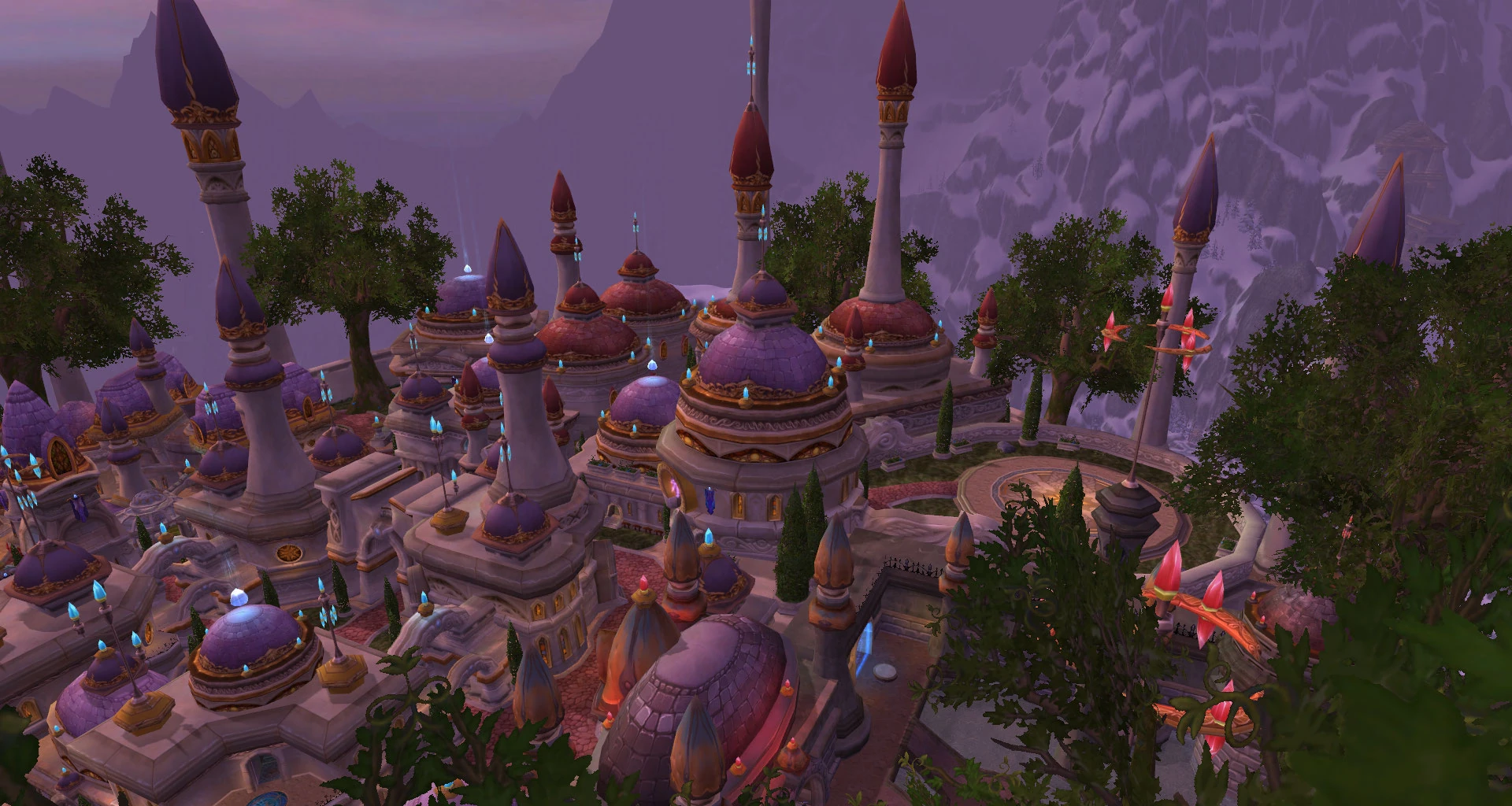
Changing the screenshot format | WoWWiki | Fandom
((image credit; WOWWiki))

Okay, fine. I started playing World of Warcraft around four years ago, and I am still daily playing the game. Get my dailies done, search for specific mounts, do a player vs. player events...I can certifiably say that I am addicted to World of Warcraft and it's crawled it's way up to one of my favorite games of all time and one of my saving graces during quarantine. With the release of a new expansion, Shadowlands, on the horizon (for the love of god Blizzard, give us this new expansion) and the game given a 100% experience buff until said new add on for the game, it's made me want to play some of those old characters I made just when I had unlocked the class in-game. I'm not even going to describe the game, as many people either don't care (and I totally understand) or already have too many hours to count. I have met so many people from around the world in World of Warcraft, including someone I consider a best friend who I would have never met if it wasn't for a game like this. I have also met real life friends (right, it's CRAZY!) due to WoW as well. 

I was never an MMO fan, but this game changed me. I have collected books and lore tomes about the world of World of Warcraft and have fallen deep into this lore-hole so to speak. I fell in love with characters and storylines and the fighting between the Horde and the Alliance. I have connected to people and the multiple characters in WoW's story then I have in other games. It's also grounded me during this time and helped me keep a normal routine, something that if I hadn't had would have most likely driven be pretty nuts.

3. Final Fantasy 7 Remake (PS4, 2020)
Image may contain: one or more people

A part of me feels almost feels ashamed that beating the Final Fantasy 7 Remake took me close to a month and a half. Granted I was attempting to do everything I could, like side quests and arena missions, but I think the main reason was I didn't want it to end. See, while this remake holds that name, it's really only part one of a huge remake of the original classic Playstation 1 classic. And damn was it worth the time I've put into it. I was hoping a huge RPG would take a lot of my time during this quarantine, and of course it would be the king of them that would help me out. I still plan on going back to the Remake once I have the free time, finishing up the summon quests and getting all of my party to max level. 

The reason why I'm not going into full detail of the Remake here is because I plan on making a huge essay on the main story changes just in part 1, and comparing them to director Tetsuya Nomura's big epic that is Kingdom Hearts. While this sounds like a crazy concept, I feel if one can (take upon themselves the monumental task) of understanding the story behind Square and Disney's insane crossover, the ending of Final Fantasy 7 Remake will make a whole lot of sense.

Or, well, as much sense as it can right now. Where's part 2, Square??

4.Project DIVA MegaMix (Switch, 2020)
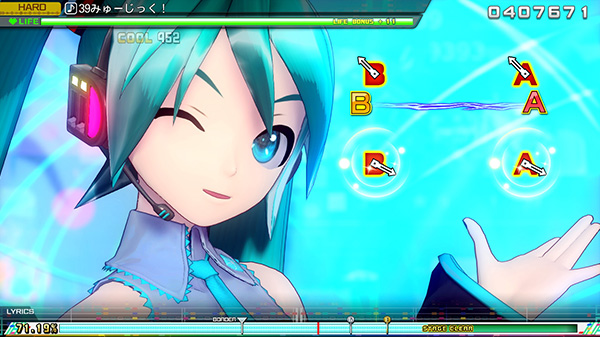
Hatsune Miku: Project DIVA Mega Mix launches February 13, 2020 in ...
((image credit; gematsu.com))

Okay, again, I'm a sucker for certain things. I've played every Project DIVA title that has released on US consoles up till now (even the iffy ones!) so even with the overlapping track lists and the same modules (outfits), I still will put tons of hours into a single rhythm game. For those who don't know, Hatsune Miku is a virtual idol. She's literally a computer program that you can generate vocals for, and she will sing for you! She's spawned merch, video games, albums and even real life concerts (RIP Miku Expo 2020) and has a huge fanbase, just on her alone. The Project DIVA titles I describe to people as guitar hero without the dumb controller. You hit the face buttons based on the beat and with the switch port, gives us a touch mode that, in my personal opinion, is the best way to play this game.

The Switch, with it's small controllers and weird button placement, was not meant to play a game like this. Doesn't mean it's stopped me from importing the Japanese release with a help from a friend AND purchasing the US release when it hopped onto the e-shop. I honestly don't know if i'm playing this because I know the concert will be cancelled or if I just want to hear the boppy tunes and dress Miku up in those cute outfits. 

I miss concerts.

5. Gears Tactics (PC, 2020)
Gears Tactics started out as a board game, here's what it looked ...
((image credit; polygon.com))

So Gears Tactics is the only game on this list that I haven't beaten yet. Obviously from this blog you can tell i'm a bit of Gears head, but I am not an X-Com player at all. So buying this was pretty hard. But I can say from what I have played, I'm enjoying! A prequel to the rest to the rest of the series and connecting to the new trilogy in particular, Gears Tactics is a turned based tactical shooter that will most likely make you think more then the average game. Every mission I have played I have been seen squinting at my screen and constantly trying to plan moves in advanced...and having plans destroyed in a matter of seconds. Honestly, when things liked that happened I would get annoyed and most likely turn the game off. But even when I make mistakes in Tactics, i'm taking a few steps back, realizing what I did wrong, and figuring out how to fix it when I'm in the same situation. 

Perhaps it's the fact it's a Gears title that's keeping me playing. I have fallen in love with this world and I want to know every bit of it, characters and timeline included. But I can't wait to see where Gears Tactics takes me, and it's got me thinking a bit more that I normally would during a quarantine right now. It's a thinking man's game, and I think it's partially keeping my brain working at a time when I just want to be lazy, and that says a lot right now.

Hopefully some games on my list find it's way onto yours! I wanted to write a little something in between planning out my next big essay articles here. As of right now, i'm planning on writing a short essay based on the recent Silent Hill rumors and what a new title can do with the recent use of mental health in horror titles! A topic i'm very interested to step into and discuss. Thanks all <3 

Wednesday, May 27, 2020

What makes a horror game...a horror game? part 2!

The year is the far distant past of 1999. Around that time, I was only 3 years old, people were freaking out over Y2K, and PC gaming was on what man consider it's greatest high. Epic games (hey, sounds familiar??) releases Unreal Tournament, the precursor for their Gears of War franchise (I swear I did not plan it this way) Id wows us with the with the combat of Quake III Arena. But off in the corners of the PC gaming scene, Looking Glass Studios and Irrational Games came together to create what would later become the sequel to their 1994 title System Shock, System Shock 2. What those two teams (and the games head, Ken Levine) would later find out is their little collaborated sequel becomes one of the highest rated and well-loved PC sequels in gaming. And also, a title that shaped so many in the gaming industry, from Levine's next title, Bioshock, to EA's horror line Dead Space.


"Look at you, hacker. A pathetic creature of meat and bone. Panting and sweating as you run through my corridors. How can you challenge a perfect, immortal machine?"-SHODAN System shock 2

The first thing you see started System Shock 2, when you past the opening cut scene that explained the first title, is the dark, futuristic streets of an unknown city. Because see, you are a macho military grunt looking to find where you future lies. Choosing from marines, air force, etc. But each round of training raises certain attributes, totally something you'll need  for the upcoming hell-scape the game throws you into. The next thing you realize, is the ship you have been stationed on, the Von Braun, is suddenly under attack. Running for your life, you are helped by a woman, and supposed second only survivor of this attack, Janice Polito. Following her rather rude requests, you explore the ship in an attempt to leave. But seeing as this is a science fiction space horror, you run into terribly mutated humans, experimented monkeys and killer robots. All of these enemies were created with help by the evil AI that has taken over the ship, SHODAN.

((Image credit; System Shock Wiki))

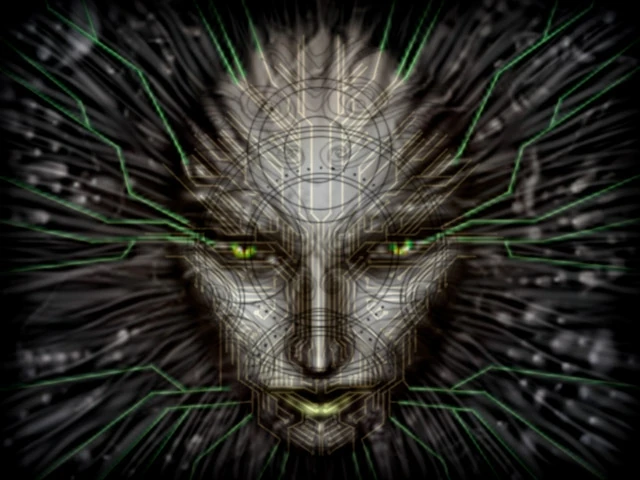
Now a lot of times when people write about System Shock 2, you can't go a few sentences without her being mentioned. Hell, in most 'best villains' or 'best twists' in video games, SHODAN is most always on the top of the lists. With, obviously, good reason. Normally, horror games throw you into a situation where being alone is the last thing you want. In System's case, you honestly want to be alone. Throughout a good chunk of the game, you are being actively spoken to and given places to go by her. By the enemy you are trying to kill in the game. Every time a quest is finished or an item was found, you have SHODAN in your ear, commenting on your slow push forward. With a robotic voice and eerily human face, she is an AI that wishes to be a god, and will even work with the enemy to get what she wants. Besides, you're nothing but a fleshbag to her. SHODAN has no space in her new reality for you! 

A lot of what the horror in System Shock 2 came in it's audio design. The punchy techno-beat background music and the haunting background noises. Malfunctioning sliding panel doors, the soft beeps of computer and the softer beeping noises of the security machines down a hall. But, the audio editing that went into the enemy sounds is something that has never escaped my mind. The groans and yells of enemies, the slightly disorienting monkey noises from the test animals and the soft, feminine voices of cyber midwives. Unlike most enemies in horror games, who make gross, fleshy noises, the enemies in the halls of the Von Braun speak to you. Calling out such haunting words as 'I'm sorry!' and 'Kill me!' that drone from their lips as whats human can feel the pain of the mutations, and cry out when you kill them. The game wants to remind you that they were once people too, and death is the only way that you can free them. 

Along with audio design, SHODAN herself is highly important to the game's horror aspect. As quoted above, you are seen as nothing but a 'pathetic creature' to the AI. You are nothing, she is everything. The next step in evolution, one that cannot age or grow old. She wants to rule with the only reason why being is it's her destiny. And the fact she sees herself as a real person, and as the one true leader of humanity, is one of the scariest things this title produced. With her control over the alien force 'The Many', SHODAN basically has an never ending army, one that one after another chases after you after an alarm is set off, and the fact she could have chosen anytime she wanted to betray you are unknowingly helping her makes her a predator. A dangerous force that knows that you, its prey, can be very easily manipulated. Throughout the game you are given upgrade points by SHODAN, told where to go and even help her getting rid of your common enemy. 

System Shock 2 Is Now Available On GOG.com | Kotaku Australia
((Image credit;; Kotaku.au))

Two years before System Shock 2 released, the body space horror Event Horizon (1997) released to a very iffy reception. The film is praised for it's special effects and setting, but is pretty much knocked down for everything else. While I am not going to go in full details of the film, it's easy to see a lot of influences in System Shock 2. The body horror with the human/Many hybrids, the derelict empty spaceship, and even the use of ghosts and disembodied voices to tell a backstory. While none of this has been confirmed, one can agree with the mental thought that the film played a role in System Shock 2's horror, but also that the game worked with those elements as a stepping stone and building on it, just as many other modern day horror games used it for the same purpose.


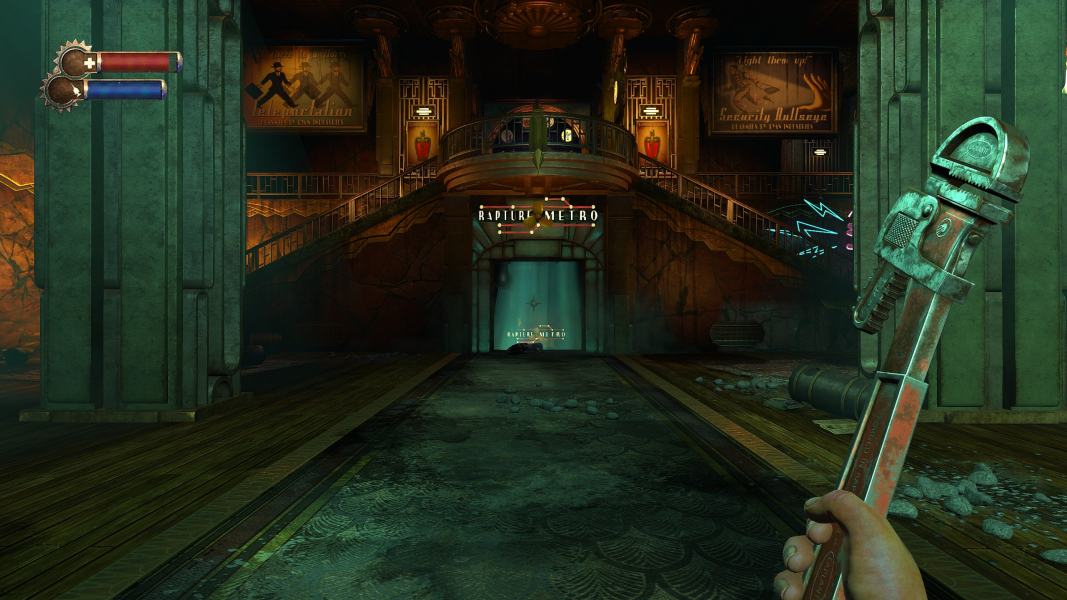
Earlier, I spoke about System Shock's director Ken Levine. Many of you would already know that name as Levine is the creator of the Bioshock franchise, starting with the first title, created in 2007. Originally meant to be a System Shock title, Bioshock was created by Levine wanting to recreate the heavy atmosphere as he had with System Shock 2, and only playing a few hours of Bioshock, one can easily point out specific aspects taken from his first title and molded into his second. The same storytelling ghosts exists in Bioshock and have the same purpose, teaching us backstory and learning about the citizens of the underwater city of Rapture just as they were used to show us the workers of the Von Braun. One can even argue the character of Atlas is a direct reference to our AI queen SHODAN, though I'd rather not spoil Bioshock in this post (But maybe i'll make a smaller essay comparing the two characters later on?), but it's not just things as big as characters you discover in Rapture. You start off the title with a wrench as a weapon, just as you did with System. The dark underwater city can be the below ground version of the Von Braun, and plasmids (Bioshock's crazy science fiction powers) being the same as Psi powers you can focus on in System.

BioShock Remastered | WSGF
((image credit; wsgf.com))

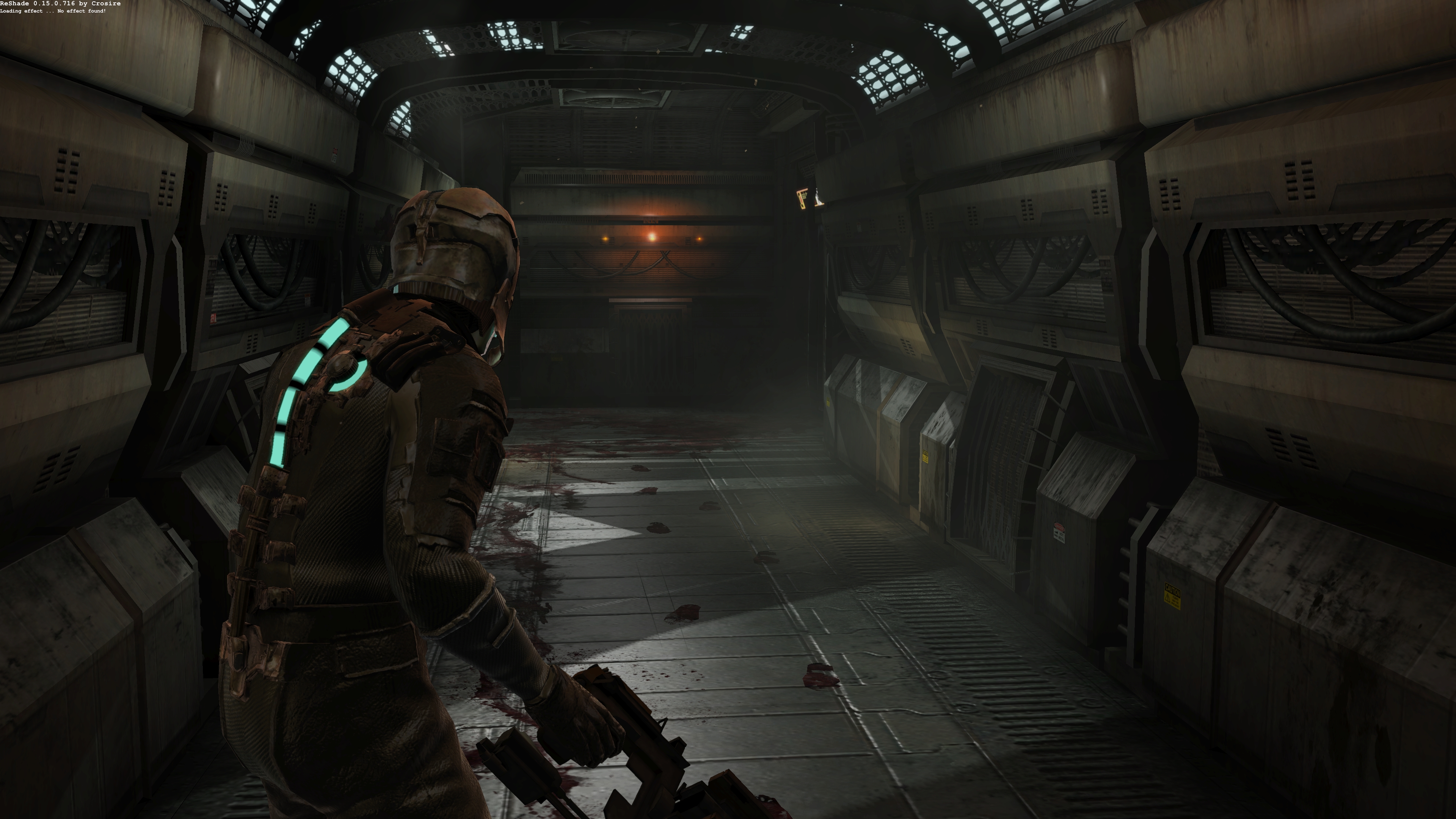
While you can argue that Bioshock is a direct successor to System Shock 2, another title that released in the 2000s can be seen easily taking System Shock's place as the modern day space horror shooter  is the first title of 2008's Dead Space, published by EA (oh??) and made by Visceral Games. You are a engineer named Isaac Clarke who travels to the USG Ishimura in an attempt to find your wife, only to find out that the ship has fallen to an alien/human hybrid species called the Necromorphs, summoned by a object call the Marker. And just by the explanation of the plot, you can see the similarities to that of System Shock 2. We got the USG Ishimura being the new Von Braun, both being decrepit, eerie spaceships, and in place of the Many, you have Necromorphs. The only difference being the Necromorphs do not yell at you to kill them (a lot more aggressive, too many sleepless nights from me with the image of a Necromorph running at me behind my eyes, ugh.) but just try to kill you. Also, have I mentioned how Dead Space was originally supposed to be a sequel to System Shock 2 until Resident Evil 4 came along? 

Screenshot - Cinematic Style (Dead Space 1)
((image credit; sfx.thelazy.net))

Not too many games that have released hold such a historical role in gaming history then System Shock 2. Even now in 2020, both System Shock titles have been released onto modern PC gaming sellers such as GOG and Steam, and even the first title has received an enhanced remaster and even has a full remake in development from NightDive studios. But System Shock 2 remains the same as it did twenty-one years ago. With the same scares, the same audio (and hey, some purchases even include the games Original Soundtrack which I cannot recommend enough) and same graphics. Now is the best time to go back in time and replay this classic, and hey, maybe a horror game you've played wouldn't have been here if System Shock 2, and the collaboration between Looking Glass and Irrational Games, had never happened.


Hi guys! Whoa, this was a dozy. I just wanted to thank everyone for the love, support and critique for part one of this little essay I wanted to write. I've loved horror games since I can remember, and it was amazingly fun to dig into one of my favorite games of all time and finally yell into the internet void about System Shock. Especially with the recent news of Tencent buying the rights to the series, insuring that System Shock 3 actually happens! For now, i'll just link the demo that Nightdive kindly released on GOG today for the System Shock remake, and I hope this convinces you guys to discover the series for yourself! https://www.gog.com/game/system_shock_demo

<3 Sarah 

Monday, May 25, 2020

What makes a horror game...a horror game? - A genre op-ed part 1!

When I was in film school, I took a class that was required of my academia called GWAR (raise of hands if you dealt with this...just me? Oh.) While, for all the acronyms and long words, was basically a writing class based around a subject of study and then, well, anything. Lucky for me, I had a student teacher (i.e, a nerd) who proudly carried her web-comic bag in with her as she came into class. 

Why am I telling this? Well, getting to the point, on Fridays when papers were due, she would greet us with an old, fat Sony Playstation 3 model and one of many old, niche horror titles. We would turn in said papers, and she would have us play through the first hour of said games and have us talk about how the game related to the film we had watched that week. At the time, video games were one of my reasons for becoming a film student (as I proclaimed "Video games are the closest thing we have to interactive films!" every family round table when my comment would be brushed off as the teenager I used to be) and as such, I was the first to always raise my hand, comment on the film tropes and camera movements the games were using that were easily taken from films of the same genre.

And while we can have titles like Naughty Dog's magnum opus The Last of Us or Capcom's B-schlock flick Resident Evil, horror in video games run exactly as horror in movies do; it's a genre term that can be melded and molded like a paste, and mixed with different ingredients to make a horror that on the surface, may not scream that blood, guts, swearing, chainsaws as you would think (Evil Dead, The Exorcist and every slasher film ever made, i'm looking at you!) but really, horror can come in anywhere such as a wrecked, destroyed civilization and low ammo count as Gears of War, and then after that I'll bring you all back to the late 1990s, and send us up into space as we discuss the forgotten horror gem that is System Shock 2, and explain how it paved the way for the 'subtle horror' that we got in the 2000s of gaming. 

"Dammit, we suck!"-Damon Baird, Gears of War

Gears of War Screenshots 

Released in November of 2006, many say that Gears of War created what many gamer's today call the 'chest high wall shooter' as, for those who haven't played the game, a lot of the first title involves making it to an open space, chest-high walls appear either from some mechanisms created by either opposing armies, or even by an act of some sort of benevolent god ("oh man, we need cover? Look out for that falling chunk of building that is going to fall miles away and make us cover!") and you have all of Gears in a nutshell. So obviously, you might be asking me, how the hell is Gears a horror title?

Well, i'm sure people have heard of the horror shooter. It's what Resident Evil became for a short while, and it's what games like Dead Space helped to pioneer in the mid-2000s...just when Gears came along. Really, the series horror roots can be seen starting as early as the original, eerie and very well produced 'Mad World' teaser. Set to Gary Jule's haunting cover of Tears for Fears 'Mad World', we follow the main character Marcus Fenix as he is running from an unseen pack of the series villains, the Locust (alien lizards really) as he breaks through destroyed buildings and past once bustling streets. The trailer even starts with an incredibly haunting first-person shot of Fenix cradling the cheek of a once beautiful angel statue. The trailer ends with Fenix being the only person going against a giant spider-like locusts called a Corpser, set in a dark room and glowing eyes/machine parts of the creature. Note through this shot, the sounds of gunfire and creature noises are muted so only the piano of the song is audible. 

GEARS OF WAR - Mad World Trailer [720p HD] - YouTube

That trailer made an impact on me in my late digits. I remember seeing it in a movie theater and realizing just what games have become. A haunting trailer for a game I had no idea of, that interested me to no end. Playing it now for as long as I have, I have come to welcome Gears'  brand of horror. The type of horror that shows rather then tells. In subtle broken down buildings and fluttering propaganda posters in the wind. The soft echoing of the wind in broken down skyscrapers and the even softer growling and yelling of the Locusts in the background. The sounds of glass breaking as their large feet break through what was once ours. The Locusts can basically appear from anywhere, and that's where alot of their horror lies. Yes, the 'grub holes' where they appear always come in the same places (this was mid 2000s, what do you expect with AI?) but the Locusts were smart. I can't begin to talk about all of the smart ways they would corner me, even chainsaw me from the back without me noticing. They killed squad mates without mercy and we just had to sit and watch. 

Of course the night wasn't safe either. While we need to worry about unwanted animals and bugs, humans on the planet Sera had to worry about killer bugs, Locusts coming from the shadows. Basically, what i'm getting at here is Gears never made it easy to survive. And that's where the horror lie. The humans of Gears of War had their planet taken away from them in a matter of weeks. Humans are becoming extinct and we're sending endless fodder of soldiers in an attempt to push it back. Our world is being destroyed around us, ammo is scarce during firefights and even the guns you pick up start off low. You pass destroyed corpses and burning crashes. The horror in this shooter series is the horror of losing everything you've built. It's meant to show what can happen in literally a snap of a finger, with billions dead and humanity driven back. We become the endangered species, and the first title in the series shows this the absolute best. 

So as I post this, this is my first blog post ever. And I'm hoping that with this, I can show everyone that mixing film genre/tropes/many other things and video games can show us more of what we are missing (or have!) in the genre. Plus, it gives me an excuse to talk about alot of my favorite topics and ideas. 

Feel free to follow, comment, or even ask me about things you want me to talk about! Next post I am going to dive into what I teased, System Shock 2 and it's horror impact on many games you wouldn't even believe are horror! 

((screenshots (in order); trueachievements.com))